Stone guide
Every stone has a character.
Material families, the makers behind them, and the finishes — everything worth knowing before you choose.
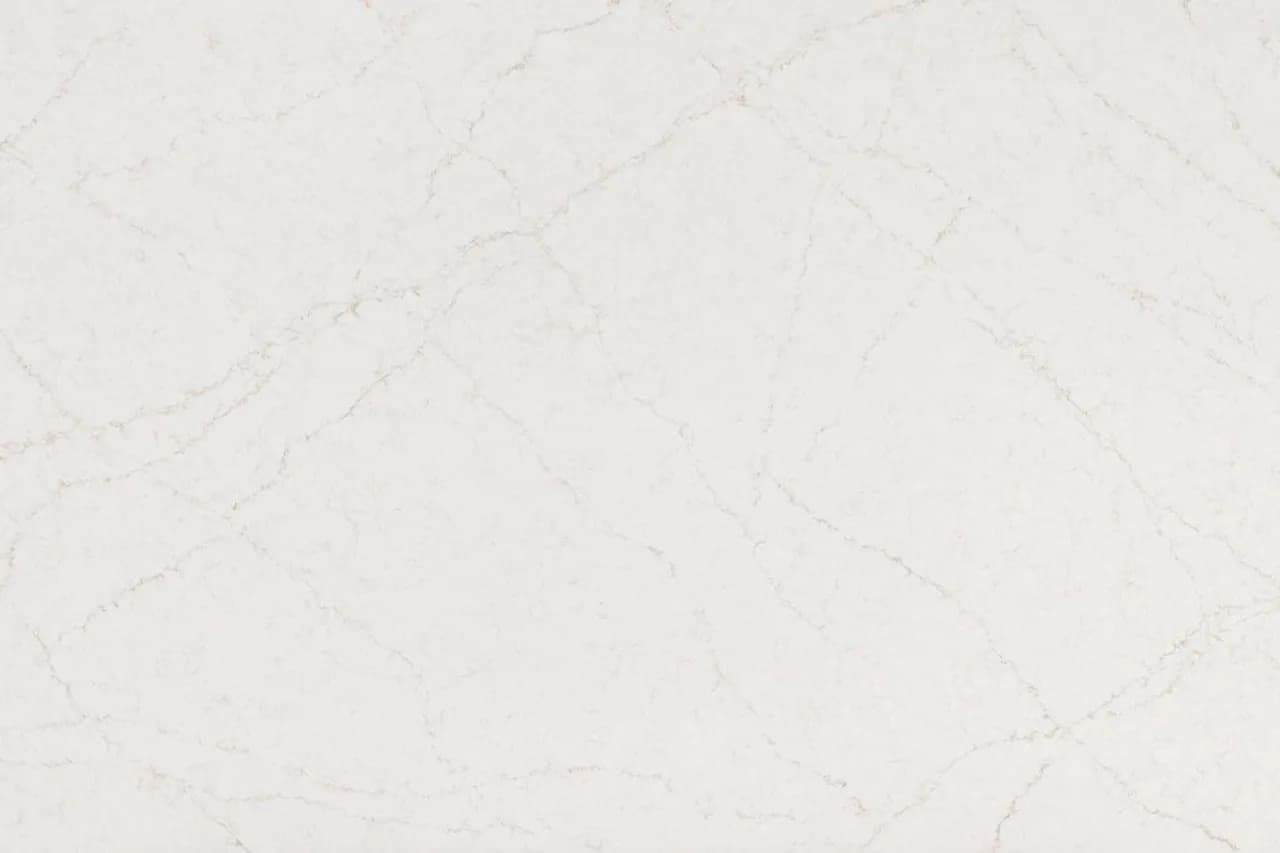
Origin
Before the stone reaches the workshop
Judging the quality of stone is hard for a non-professional, and often impossible. Stone sold under one name can differ considerably in both colour and pattern. Much depends on the quarry — where it is and who owns it. How the stone is taken out of the ground matters just as much. The financially strongest and most professional companies in the world use specialised equipment and technology to cut blocks out of the rock. The weaker ones blast the quarry first and cut the blocks afterwards.
Our stone workshop buys stone and quartz already made into slabs, 10, 20 or 30 mm thick, with the top face already finished — polished, matte, flamed or antiqued. Granite slabs run up to 3.40 m long; marble, onyx and travertine up to 2.90 m; quartz up to 3.2 m.
Material families
Five materials we work with.
Each has its own guide page. Quartz and porcelain also have their own makers.
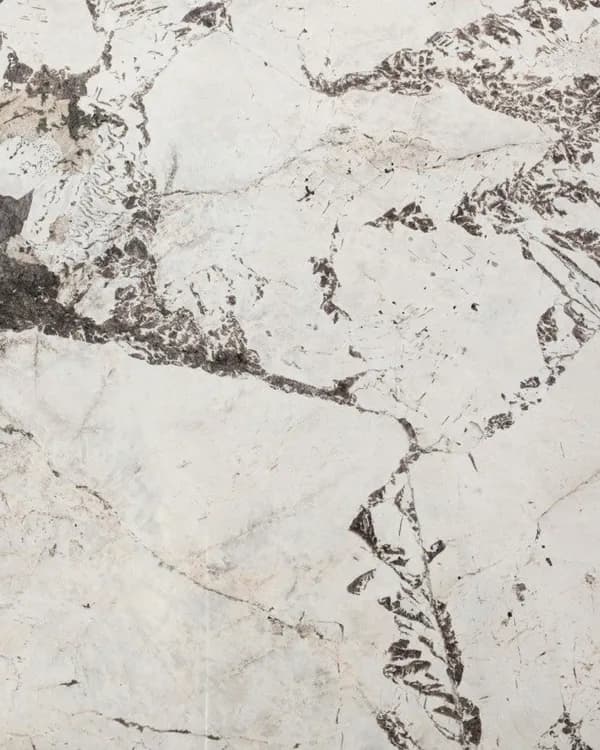 GraniteExtremely heat-tough — nature's hardness for everyday life.Learn more →
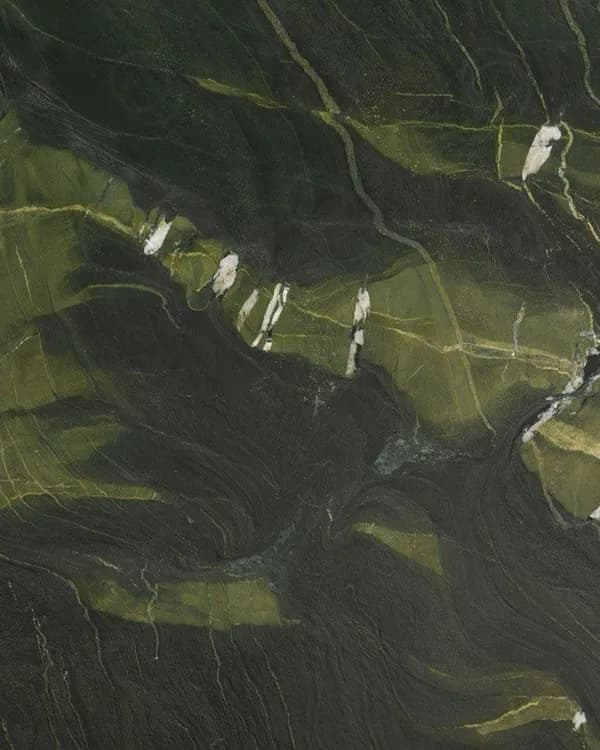 QuartziteThe look of marble with near-granite toughness.Learn more →
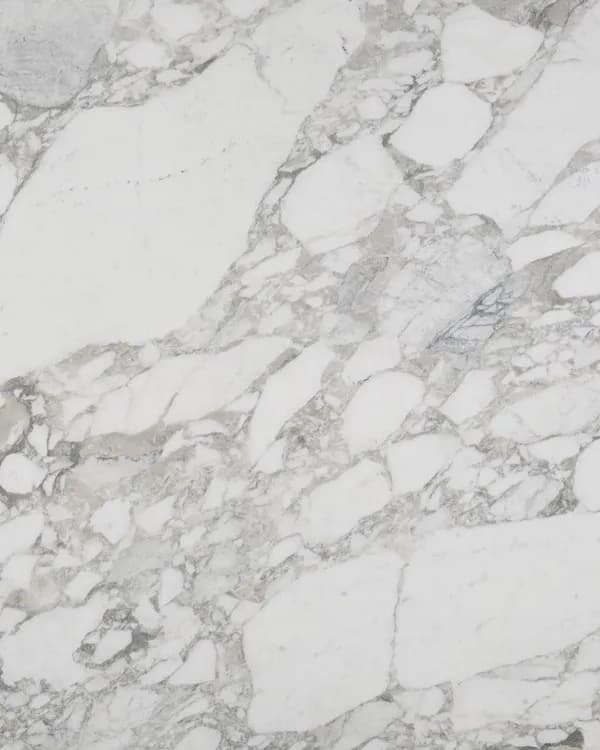 MarbleThe classic veined look — every slab one of a kind.Learn more →
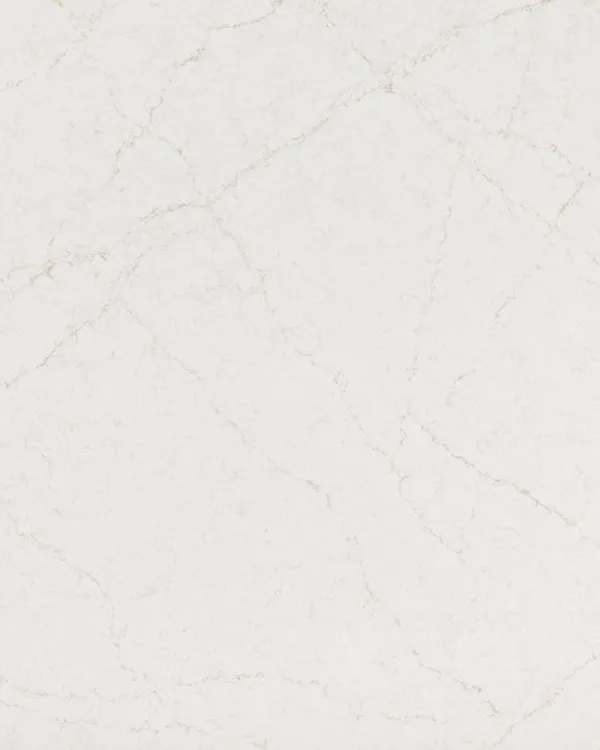 QuartzNon-porous — never needs sealing.Learn more →
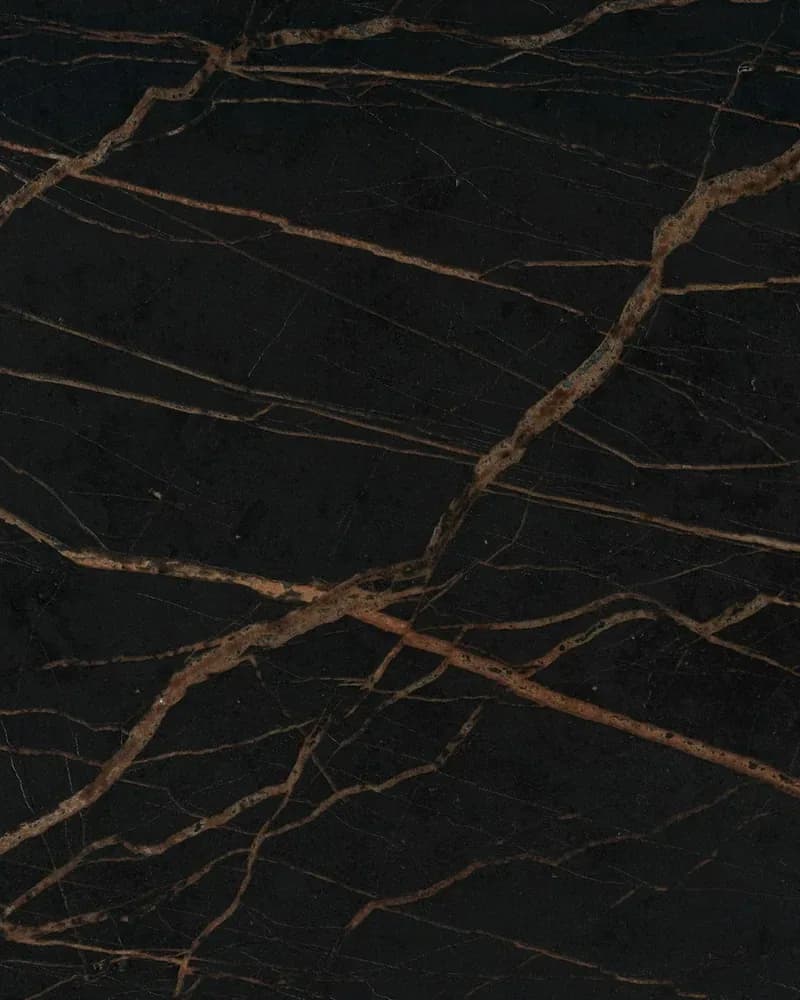 PorcelainOutstanding resistance to heat, UV and stains.Learn more →
Makers
Natural materials
Stone shaped by nature.
Travertine and onyx are made to order — mention them in your enquiry notes.
- Marble
- Marble is a rock formed when limestone recrystallises. In Latvia it is used indoors only. Its pattern is more expressive than granite's, and it comes in both vivid and pastel colours — an expressive, luxurious stone. Marble is softer and more porous than granite, which is why it is almost never used for kitchen worktops: it scratches, and it absorbs fats and coloured liquids such as wine and juice, which can leave stains that will not come out. It is an ideal finishing material for walls, bathroom surfaces, fireplace surrounds, shower rooms, saunas, heated massage tables and the like.
- Granite
- Granite is one of the hardest, most durable and easiest to look after of all natural materials. It is safe from a fire-safety point of view and stands up to scratches and heat, and it absorbs very little liquid or dye. Ideal for interior and exterior work alike. It will last a lifetime: Latvia's changeable weather and swings in temperature leave it untouched.
- Travertine
- This stone is sometimes jokingly called the Latvian stone, for its light, calm tones. It recalls the shade of sand and dolomite so familiar here — the mineral most common in Latvia, and so often used in building. We have noticed that clients also like travertine's open, pitted structure, which looks decorative and unusual. Open travertine is used more often for wall decoration; for floors the holes are usually chosen ready-filled with a special invisible mastic, so that dirt cannot collect in them. Whichever you choose, think about where the travertine will sit: it should not be exposed to fats, acids or staining liquids such as wine, jam and juice.
- Onyx
- Onyx behaves much like marble, with one difference: it lets light through. Lit from behind, it gives a unique, painting-like effect. It is often used for backlit wall panels, bar counters and steam rooms — less often as flooring, and then only in rooms with light traffic.
Finishes
One slab, four different feels.
The top face is finished at the factory. The finish changes both how the stone looks and how it feels under your hand.
- Polished
- Polished surfaces reflect light and shine, because polishing closes the pores of the stone. It brings out the stone's natural beauty, making it richer and more expressive. This is the classic finish — the most popular and most often chosen of them all. It is used for kitchen and bathroom worktops, external facades, building plinths, internal stairs and floors — especially in rooms with heavy traffic.
- Antiqued
- Antiqued surfaces have no gloss — they are velvety matte. The finish makes the surface less slippery and gives it a little more texture than a polished one. It is much in demand right now for kitchen and bathroom worktops in a minimalist style, and it works for other finishes too — wall panels and decorative work. Those who choose it feel that antiqued stone comes closest to nature, with its rough, seemingly untouched look.
- Flamed
- A flamed surface has a high coefficient of friction: rough and uneven. Ideal for outdoor areas and steps, because it does not become slippery. Unlike a polished surface, the colour of a flamed one is less intense. Specialists recommend renewing the protective layer once a year, sealing the surface with a product made for stone.
- Velvet silk
- You will keep wanting to touch this stone, for the qualities its name already describes. It is matte, smooth, very slightly textured: not as bright and glossy as polished, not as rough as antiqued. The hit of recent years among designers working in modern and minimalist interiors — and lately we have noticed lovers of classic interiors choosing it too.
Before you choose
Stone is chosen in person.
One significant benefit of choosing natural stone — marble, granite, onyx, travertine or quartz — is how long it lasts. Replacing a fitted kitchen and other furniture is expensive, complicated and laborious, and fashions in cabinet fronts and fittings change as well. Natural stone and quartz keep the luxurious look they started with, so even furniture that has dated will still look right.
It is better to look at any natural stone as a full slab than to choose from a small sample: there is usually a considerable difference in both colour and pattern. The veining you see in a sample covers only a small part of the slab — the rest may be plain, or, on the contrary, heavily veined.
The catalogue shows only part of the materials we offer. Contact us to confirm availability in the quantity you need.