Materials guide
Marble
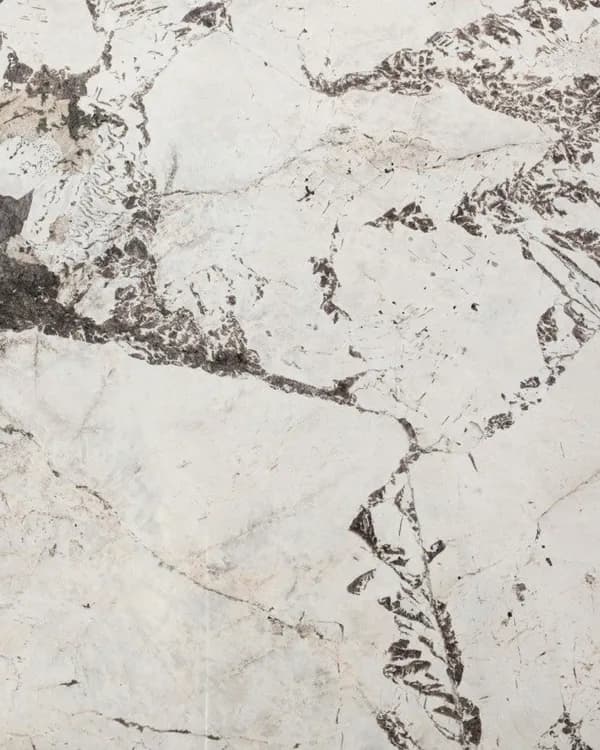
Marble is a natural rock formed as limestone recrystallises under high temperature and pressure. It is one of the most recognisable types of natural stone, valued in interiors above all for its unique pattern, colour variety and expressive look.
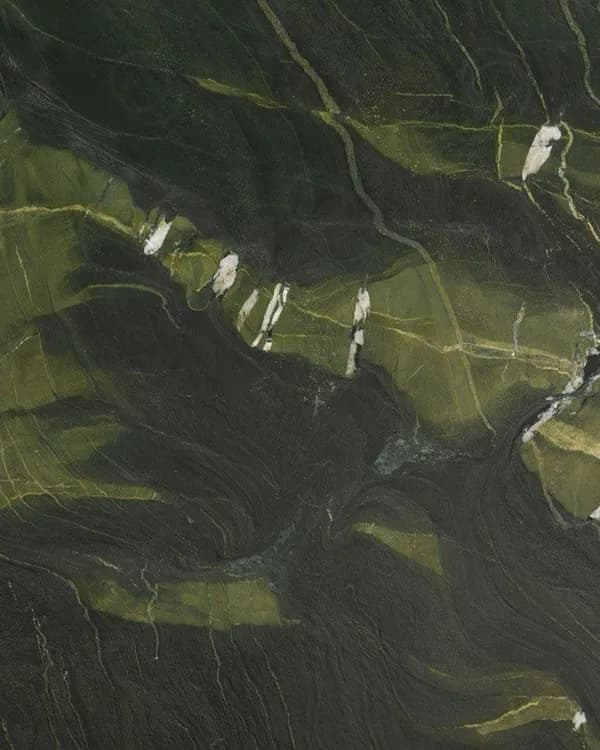
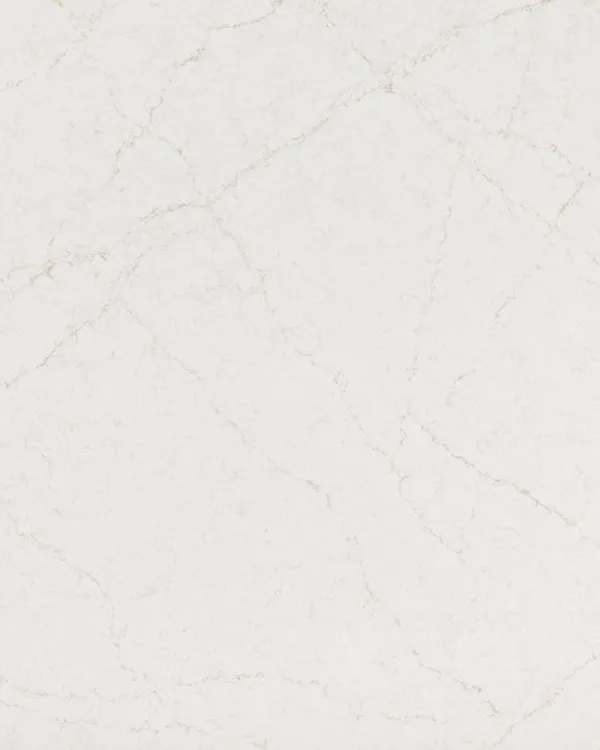
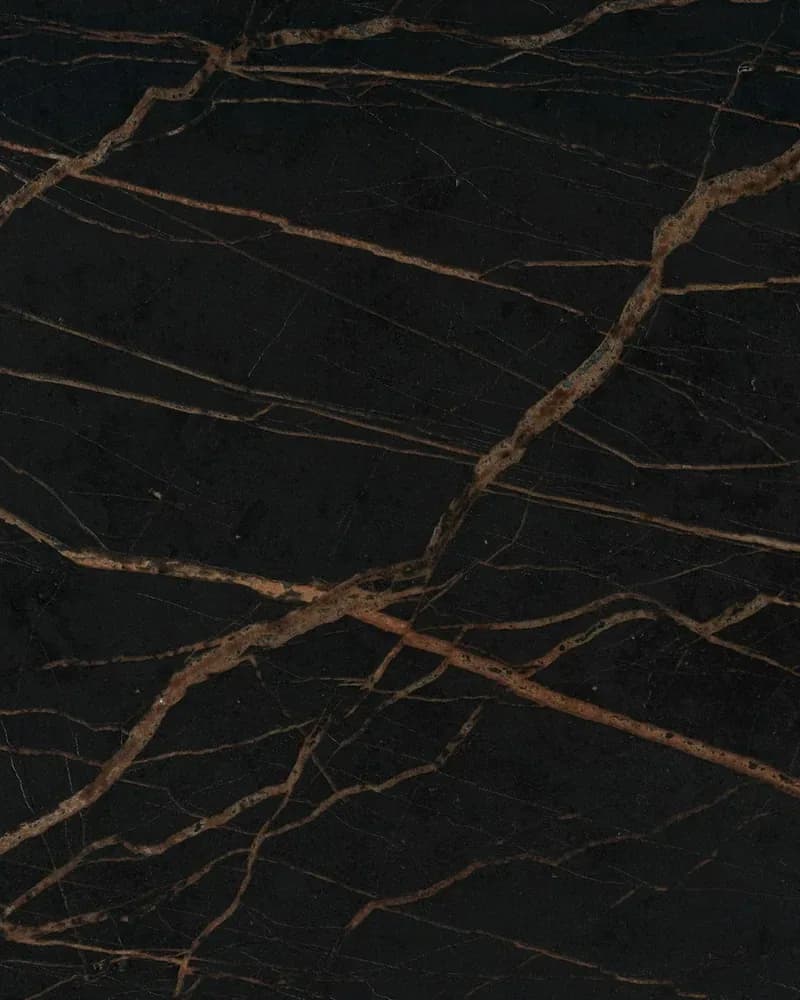
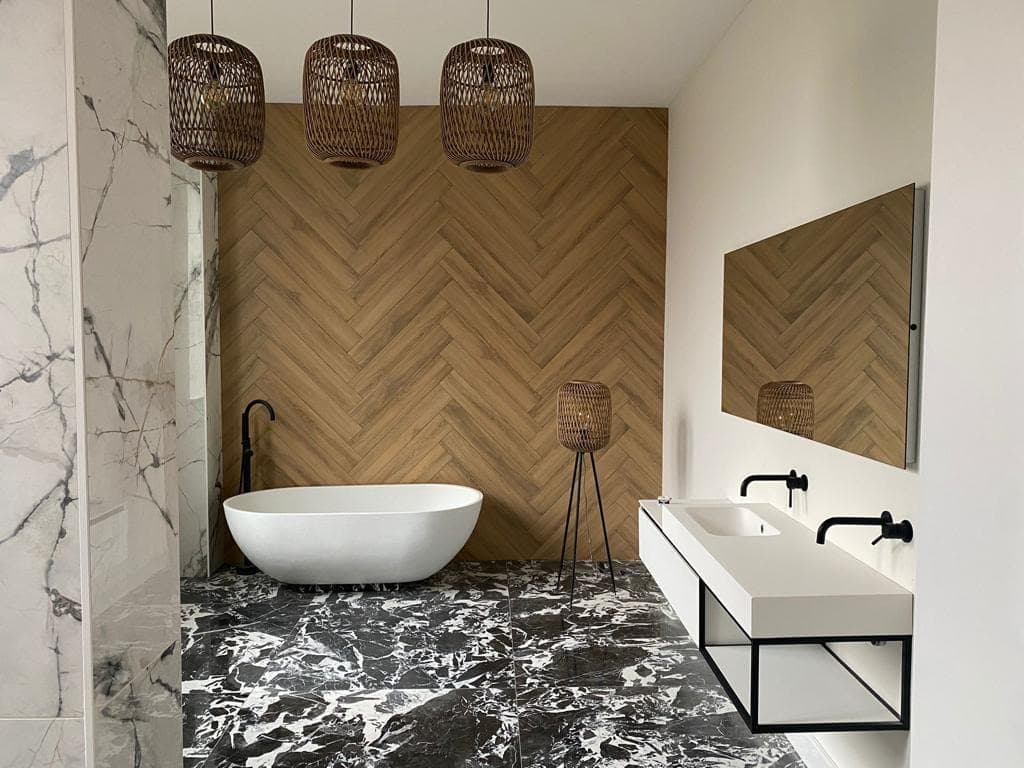
Marble's pattern is usually more pronounced and more decorative than granite's. Its colour palette can be very wide, from pure white and soft pastels to yellows, reds, greys and dark tones. The variety of colour and pattern comes from the different mineral admixtures the stone picked up as it formed. Pure marble is white; iron oxides can lend the stone yellow and red tones, while carbon can produce grey and black shades.
In the catalogue
Marble in our catalogue
Open a slab to see it up close — thicknesses, finishes and price.
0105
At a glance
Benefits and drawbacks
The advantages of marble
An expressive natural stone pattern
Marble's greatest advantage is its look. Veining, colour transitions and natural structures differ from slab to slab. That is exactly why marble is so often chosen for interiors where stone is one of the leading design elements.
Especially well suited to interior finishes
Marble sits well in wall and floor finishes, bathrooms, showers, fireplace surrounds, stairs, window sills, table tops and other applications that do not demand very high mechanical durability.
Wide fabrication possibilities
Marble can be sawn, milled, ground and polished with precision. It can be made into simple slabs or more complex forms — basins, bath surrounds, stairs and all kinds of decorative detail.
A choice of surface finishes
A polished surface brings out the depth of marble's colour and veining, while a honed or matt finish gives a calmer, more natural look. The right finish can substantially change how marble looks and reads in an interior.
Things to note
Marble is a comparatively soft material
Marble is not a material chosen for maximum mechanical durability. Compared to granite it is softer and more sensitive to scratches and wear. Before choosing it, it is important to understand how intensively the surface will be used.
Marble is sensitive to acids
This is one of marble's most significant drawbacks. Lemon juice, vinegar, wine and other acidic products can react with the calcite in the stone. On a polished surface that can leave a dull patch — not a stain that wipes away, but a chemical reaction of the stone's surface.
Marble can absorb liquids
Marble's porosity varies from stone to stone. If the surface is not properly protected, oil, coffee, wine and other liquids can soak into the stone and leave lasting stains.
Sealing is protection, not a cure-all
Keep exploring